
Cumberland County Arrest Records and Court Charges
Arrest records begin with law-enforcement activity and booking, but the court charge record starts when allegations enter the judicial system. In Cumberland County, criminal charge information is most useful when read through UJS docket sheets and Clerk of Courts records, because those sources track charges, case status, pleas, disposition, sentencing, fines, costs, and post-case filings.
The county inmate list is useful for current custody status, but it is not a full criminal case file. For a complete outcome, use criminal court records. For warrants or missed-court events, check docket entries and the Sheriff's Office access channels.
How to Find Cumberland County Arrest Records and Charges
Start with Pennsylvania UJS Case Search for public criminal docket sheets. Use the defendant name, docket number, OTN, complaint number, incident number, or filing-date filters when available. Then use the Cumberland Clerk of Courts for certified copies, older docket-book material, and criminal file questions that are not answered by the public portal.
- Search UJS by participant name, docket number, OTN, complaint number, or filing date.
- Confirm Cumberland County and the Court of Common Pleas criminal division.
- Open the docket sheet and review the charge list, statute numbers, disposition, and hearing entries.
- Contact the Clerk of Courts if certified copies, older records, or fee details are needed.
For current custody, check the Cumberland inmate listing or call Inmate Records. For official statewide criminal-history dissemination, Pennsylvania State Police rules under 18 Pa.C.S. section 9121 are separate from public docket access.
How Charges Get Filed After an Arrest: Complaint, Information, and Indictment
After arrest, the matter can move from police complaint and preliminary review into formal criminal charging. Pennsylvania cases may show complaint information, an information filed by the prosecutor, amendments, and disposition events. The docket should be read chronologically because a later entry may change or narrow the original charge list.
| Complaint | Information | Indictment | |
|---|---|---|---|
| Filed By | Officer / Prosecutor | Prosecutor | Grand Jury |
| Common For | Misdemeanors | Many felonies | Serious felonies |
| Starts | The case | The case | The case |
Charge Status and What It Means
Charge status changes as the case moves through court. A pending charge is unresolved; an amended or reduced charge has been changed from its earlier form; a dismissed charge has been ended by court action; and nolle prosequi means the prosecution declined or withdrew prosecution on that charge.
| Status | What It Means |
|---|---|
| Pending | The charge remains active or unresolved in the case. |
| Amended / Reduced | The charge was changed, corrected, or reduced as the case developed. |
| Dismissed | The charge was ended by court action and should be read with the docket context. |
| Nolle Prosequi | The prosecutor declined or withdrew prosecution on that count. |
Charges vs. Convictions
A charge is an allegation. A conviction is a resolved outcome after plea, verdict, or adjudication. Users should never treat an arrest or pending charge as proof of guilt.
| Charge | Conviction | |
|---|---|---|
| Stage | Accusation | Verdict or plea |
| Burden of Proof | Probable cause | Beyond reasonable doubt |
| Public Record | Yes | Yes |
Sealed vs. Expunged Records
Sealed, expunged, juvenile, and limited-access records are governed by Pennsylvania law and court orders. Cumberland Clerk of Courts lists expungement and limited-access fees, but eligibility depends on case outcome and statutory rules.
| Sealed | Expunged | |
|---|---|---|
| Visibility | Hidden from public | Destroyed / treated as never existed |
| Law Enforcement | Limited access | Very limited |
| Eligibility | Depends on Pennsylvania limited-access law and court order. | Depends on Pennsylvania expungement statutes and case outcome. |
Charge Codes and Severity Levels
Charges are commonly tied to Pennsylvania statute numbers, offense tracking numbers, grading, and docket entries. One arrest can produce several separate charges, and each count may have a different disposition, sentence, fine, or dismissal result.
Statewide Charge and Criminal History Lookups
For statewide criminal-history dissemination, Pennsylvania State Police channels and 18 Pa.C.S. section 9121 are separate from county docket viewing. Use docket sheets for court activity and PSP routes for official criminal-history access where required.
Background Check Considerations
Public court lookups are not a substitute for legally compliant background screening. Employers, landlords, insurers, and lenders must use proper consumer-reporting procedures when the Fair Credit Reporting Act applies.
Important: This site is not a consumer reporting agency and cannot be used for FCRA-regulated screening decisions.
Restricted Charge Records in Cumberland County
Juvenile records, sealed files, expunged charges, and records involving juvenile victims of sexual or physical abuse may be unavailable to the public. Protection-order and family-connected records may also be limited by court policy or statute.
Charge and Specialty Court Source Screens
Specialty Courts provides the local diversion and treatment court entry point.
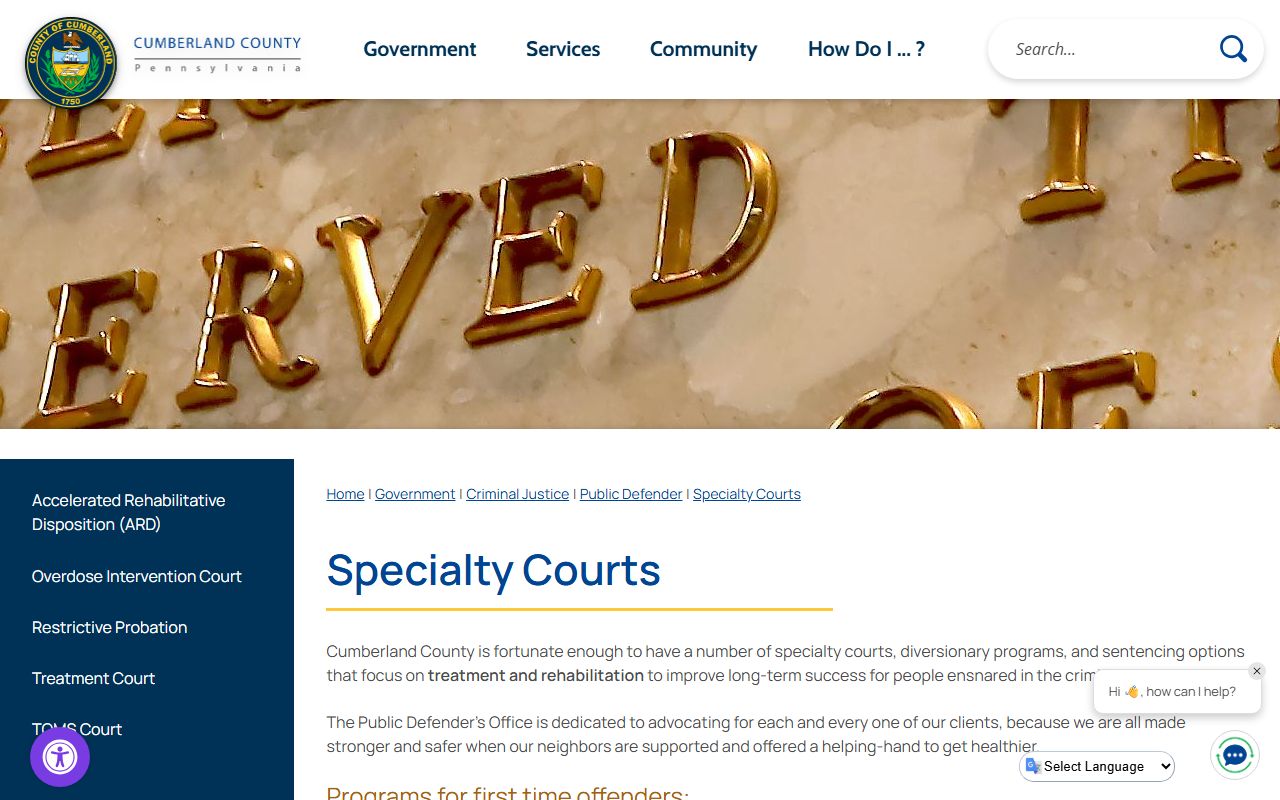
Specialty court status may explain docket events after charges are filed.
Treatment Courts lists Drug Treatment Court, TOMS Court, and DUI Court.
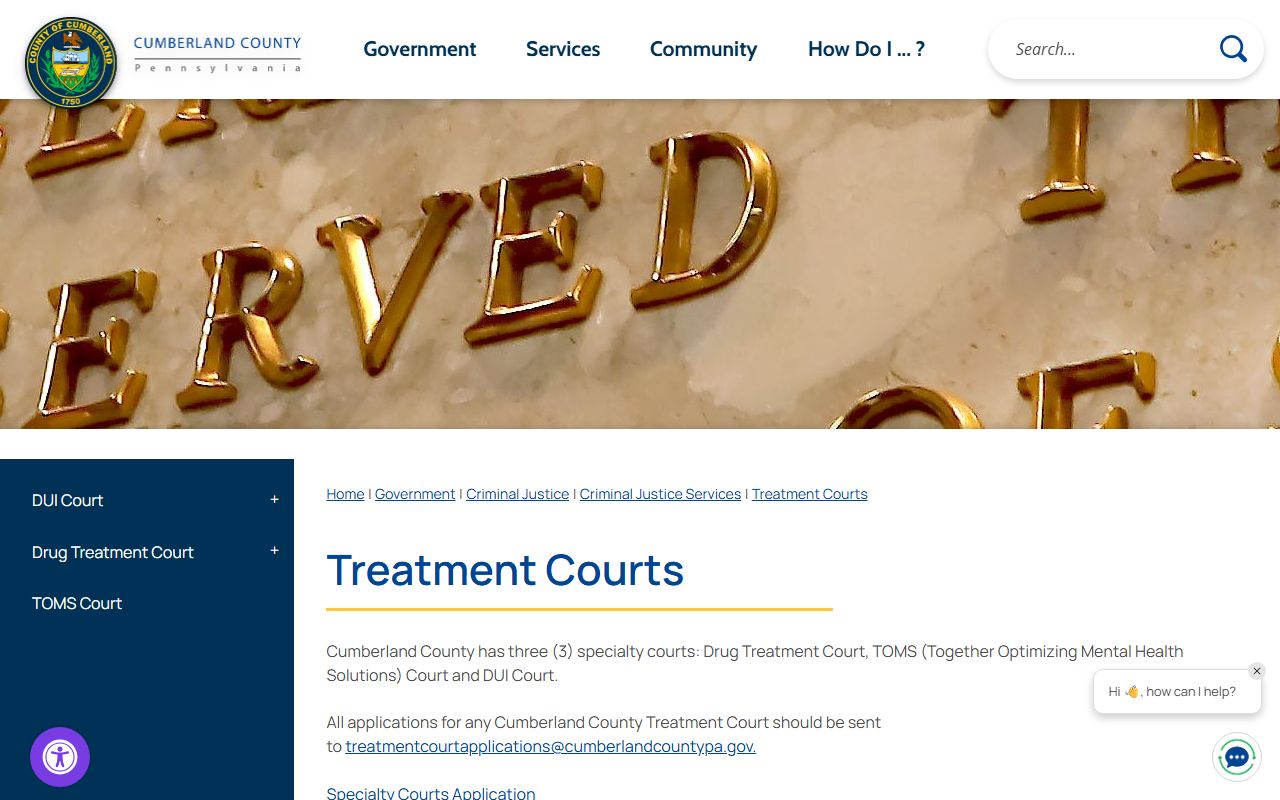
Treatment court records should be read alongside the criminal docket.
Drug Treatment Court describes program tracks.
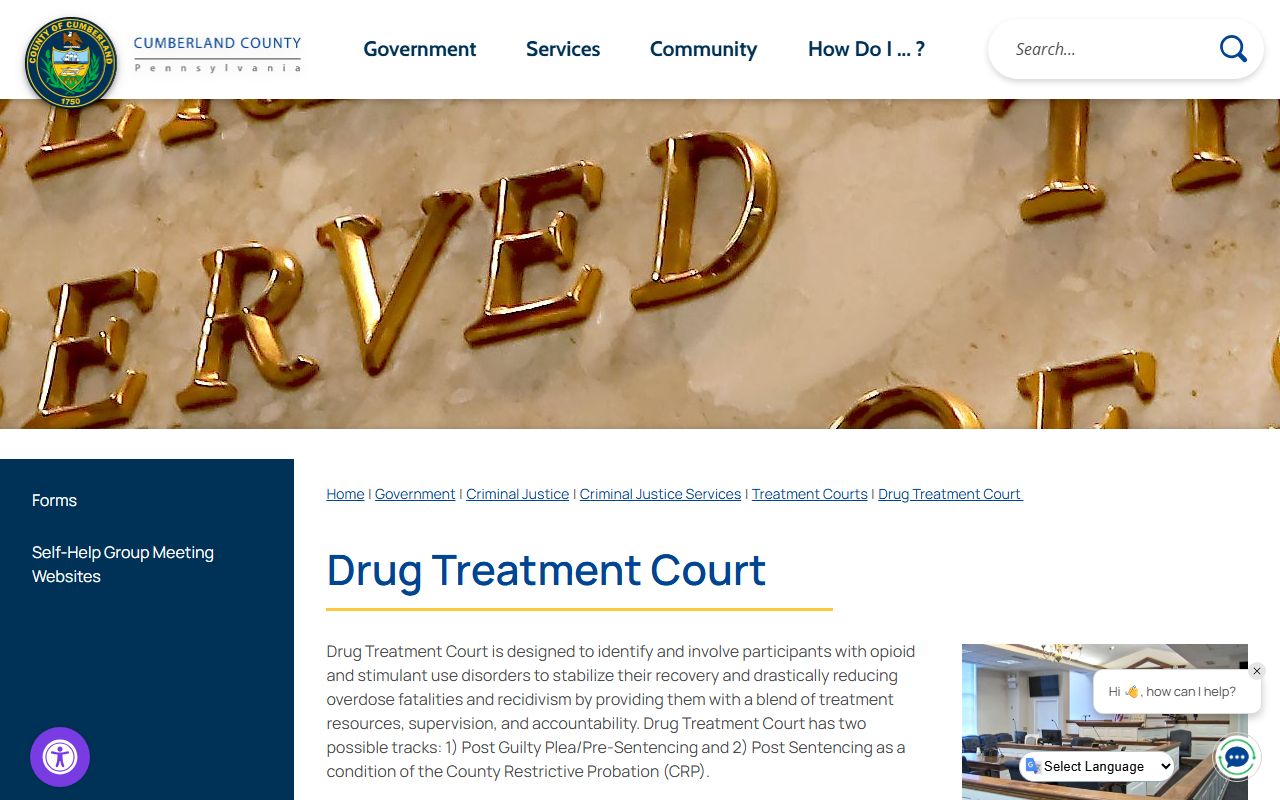
Drug Treatment Court can affect case milestones and sentencing-related entries.
Overdose Intervention Court is a county early-intervention program.
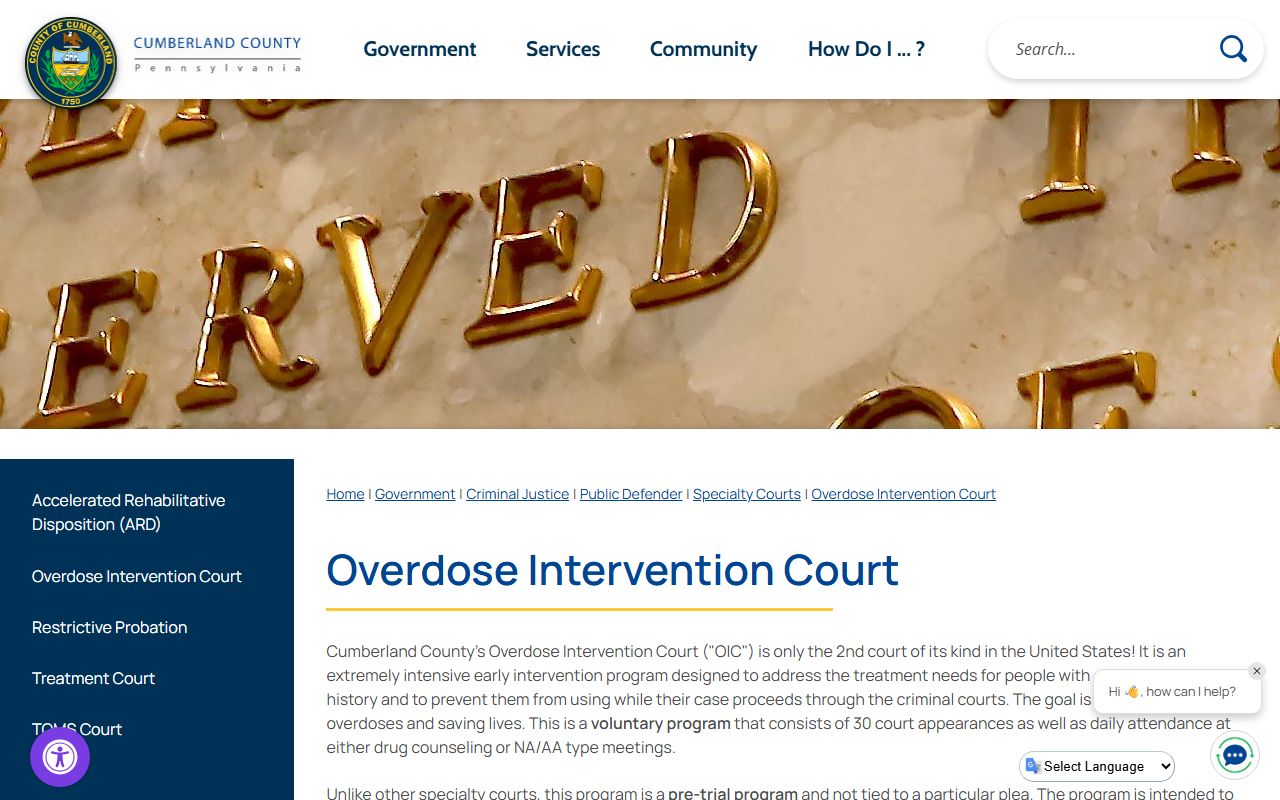
OIC references can appear in criminal case context when the program applies.
TOMS Court covers mental-health diversion.
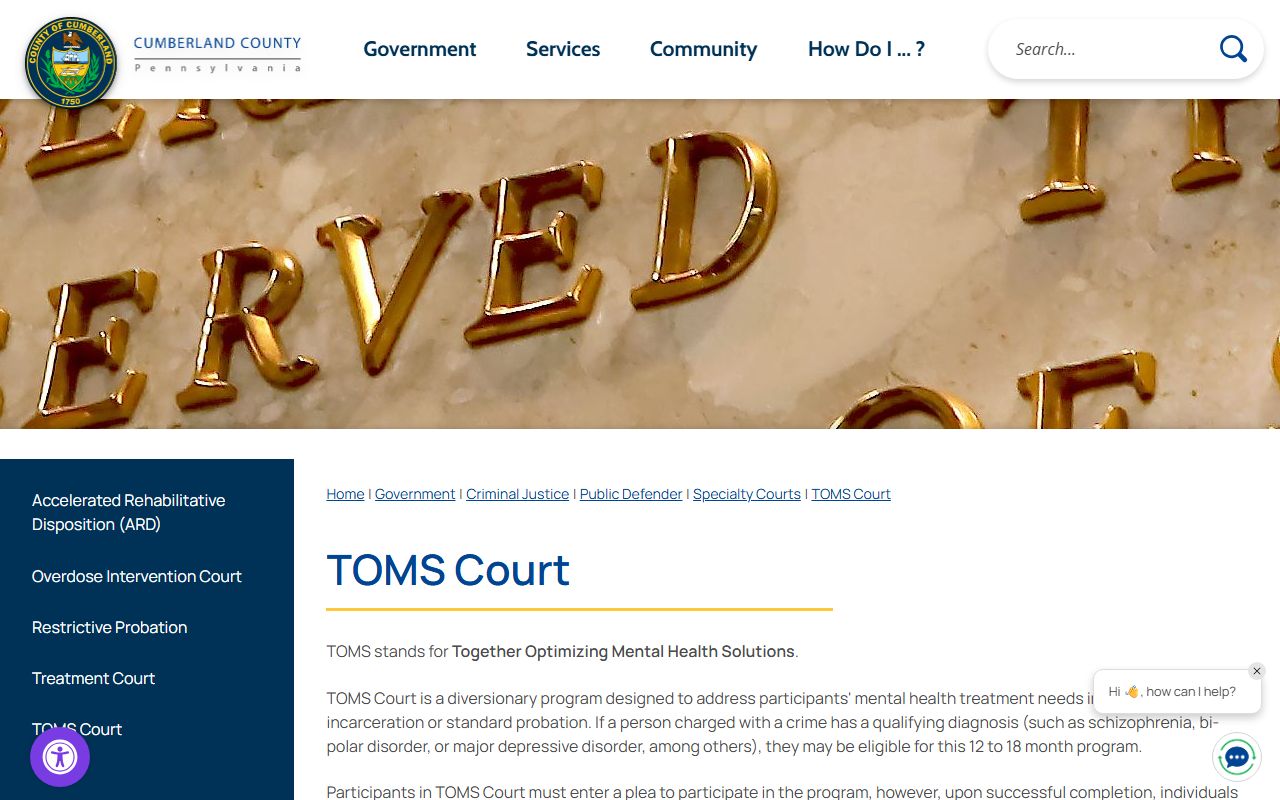
Mental-health diversion records may have access limits or program-specific case notes.